It is just wonderful how a strong identity can prove to be a catalyst to rational decision-making.

One of the differentiating factors between us social animals, the homo-sapiens and the rest of the animal kingdom is that we can make decisions. Not just decisions, rational, informed, insightful, thorough, decisions. Unlike the other species that usually make instinct-based decisions by default. Although, we humans have our limitations too. We cannot be rational 100% of the time. To err is human; a lot of decisions that we make in our lives are not even made consciously.
It is amusing that while we are responsible to create our identity intentionally- personal or for a brand, and at the same time, it is mostly shaped by how others perceive it.
As we grow up, it becomes easier to make better decisions. Growing up, not just by a number that is your age, growing up in terms of more experiences, a better sense of self. This self-actualization promotes instinctive decision making without having to refer to your values, ethics, other guidelines of your being. It almost comes instinctively, subconsciously and this gut feeling is usually right. The same happens with a brand. If the identity is strong, you avert disasters that could disrupt your brand.
Why
Our decisions are manifestations of our identity. Multiple decisions we make are building bricks of what our identity is. Decisions ranging from what we order at the cafe to the people we hang out with. Clarity of who you are will help in deciding small things like what movie you would like to watch, to what friends do you prefer, if at all.
Similarly, brands make decisions, based on which audience will perceive them, ultimately creating an identity for the brand. The brand identity will help decide intricacies of strategies like weather or not to collaborate with a certain artist, based on how and if at all they reflect what the brand values.
But not all decisions are as obvious as the one stated above. Us humans are a cocktail of biases. Things that might seem simple to you, might be complicated because of some personal bias someone else might have in their head. Cognitive biases and distortions are active and constantly nudging you towards irrational decisions. Behavior governed by biases will never be as organic as the one governed by the power of identity.
Decisions and identity have a relation like cinema and society. Films reflect society and society imitates films; decisions shape identity and identity powers decisions. We constantly try to sculpt an identity, both in the cases of personal and brand. Stronger and finer the sculpture, easier it is to use as a landmark in making decisions and for directing the design thinking to shape the future. If we get the identity part right, everything else takes care of itself automatically and organically.
How?
Identity becomes a litmus test.

“Does this spark joy?” Marie Kondo asks the participant before making a decision of either keeping or throwing away an object. Likewise, when in confusion, refer to your brand promise. Does your decision contribute towards the brand by aligning with the brand promise or not?
This calls for a case study.
The Nike promise goes like this:
“To bring inspiration and innovation to every athlete in the world.”
Now hypothetically, this is the business decision we are stuck at. We work at Nike. We are confused as to whether or not we want to invest in a fitness tracking technology that records body movement through a chip placed in the sole of the shoe and gives you an accurate analysis of physical activity and calories burnt by also taking into account your BMI along with the physical movement. Should we consider investing our product designing and R&D departments in this product?
Let’s look at the brand promise:
Is it innovative? Yes✔️
Does it inspire the user? Yes✔️
Is it accessible to every athlete (Does everyone with a body have a phone to receive the data)? Yes✔️
Well, say no more, tell us where to sign!
Do you see, no matter how hypothetical, what we did here? We translated a macro-level large scale promise to a micro-level design principle. This is how branding studios conduct design thinking sprints.
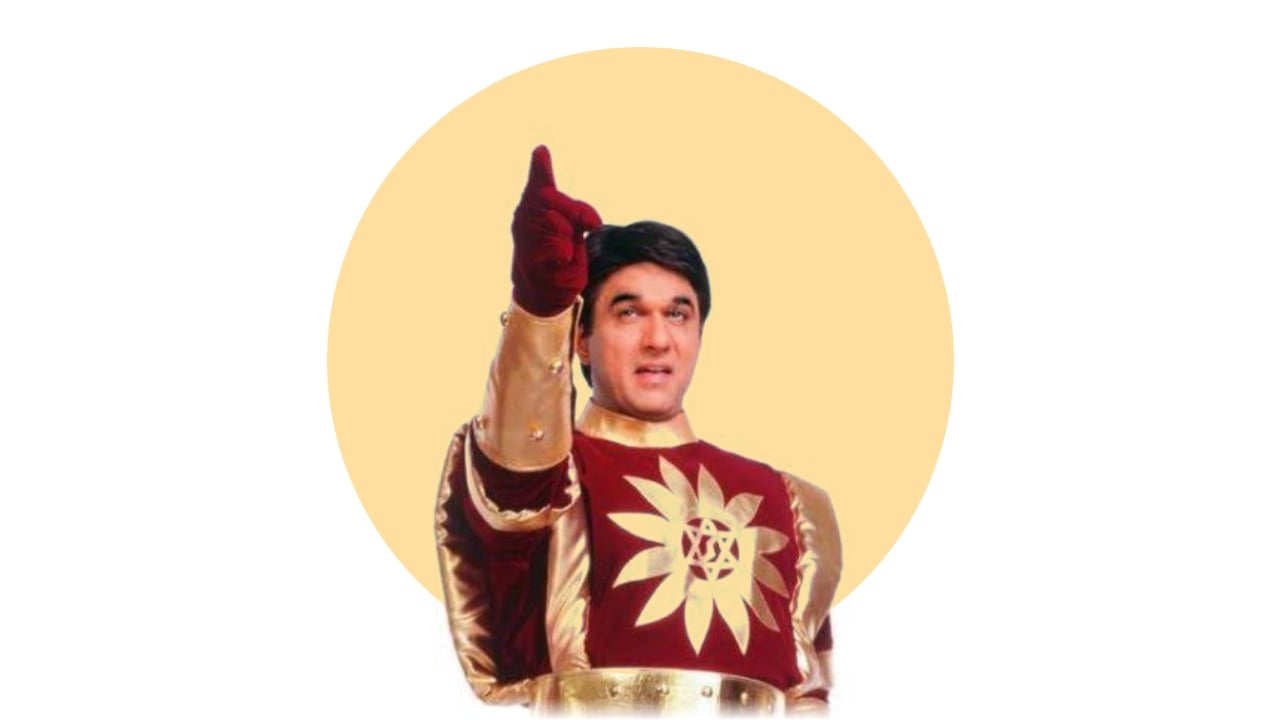
(Shaktiman, superhero of an Indian Television)
There is another simpler way to incorporate identity into decisions. In this scenario, you have to imagine your idol, the one personality you draw inspiration from. Now, think of a decision you have been procrastinating on because it has, perhaps risk involved. Now ask yourself. What would your idol do if they were in your shoes, making that decision? Does your gut agree with them? Does it match the outcome you were hoping for when you tossed that coin? This exercise usually helps in seeing what we actually want, and we fool our brains to think of an idea coming from your idol, that might have been a fictional character too. A brand is a business personified. In business, ask what your brand would do and it is most likely to follow the identity.
But
Identity is powerful, and powerful things are dangerous. Sometimes, the drive to protect your identity can be overpowering in making quick decisions. Objectively thinking about identity is not as easy. To avoid such loopholes, maintain the identity throughout. Keep it focused and concentrated. Also, keep yourself open-minded and on default truth-seeking mode. Do not be afraid of change. Do not be afraid of having an opinion. Never sit on the fence, assert your values.
Does it always work? No. but with the backing of a strong identity, the stone will never hit too far from the bull’s eye. It will help in making more accurate, stress-free decisions if not anything else.
Just like when Arjuna was confused in life, Krishna narrating the Bhagwad Geeta gave all the answers, let the brand brief act as a guiding beacon of better decision-making.
In the middle of war inside your head? Let us initiate armistice. Call us for your branding needs. We have one motto- We explain better.
Comments
Post a Comment