And here’s how it is taking over

Genesis
The app will be 10 years old in 2020. Your first social media image could be ten years old! Instagram has become a vital part of not only pop-culture but also how millennials live and create a digital existence. The double-tap has become such an involuntary reflex, that sometimes you realize you are looking at an image that is not on Instagram when it zooms in instead of a heart popping up.
The reason behind the name and the provision of Instagram are born from the same roots. The founders wanted a name that said, “right here, right now and something camera-y.” An app that is like an instant telegram. The former Instagram logo translated exactly into what it delivered with a strong brand identity. Instagram was downloaded 100,000 in a week and 2019 statistics show 1 billion users of the application.
Popularity
Soon after it’s launch, celebrities started using the platform to let their admirers into their lives. In no time, people started doing that- but for their friends.
Just like its name, Instagram as a medium in itself got instant popularity. The user growth is a graph that hasn’t gone down since launch.
Other social media apps like Twitter and YouTube have become indispensable parts of our lives. Facebook seems to be losing its grip among millennials and the coming generations. Well, Instagram? It’s already there.
Instagram today
Instagram at the core is still what it was, a photo-sharing community. But at large, it has changed drastically. There are not many who upload photos instantly on Instagram. There is a lot of thought, strategy, and work behind most posts that we see today.
People put thought behind everything they put up- since everything we put up contributes to what experts call our digital personalities. The fact that we can now create multiple profiles on the app has enabled a lot of avid users to have separate accounts for various purposes. It has opened up business opportunities for many artists, especially freelancers who use the platform as their portfolio. Some artists, especially comic artists use it not only to show their work but also to give a teaser of their work which people can gain access to upon buying subscriptions. Patreon is the most popular app for such artists who give out content and goodies based on the type of subscriber.
Instagram influencers are liked as much as they are despised. In fact, brands that invest in influencer marketing to save huge traditional marketing costs use the influencer's Instagram statistics to determine whom to collaborate with. There are tiers that decide how much pay- in cash or kinds will the individual receive based on their followers:
Nano- 1–10k
Micro- 10–50k
Mid-tier- 50–500k
Macro- 500k-1Mn
Mega- 1Mn+
However, the constant dynamic nature of the platform has taken it to a level where even nano influencers get offers for a niche product that a brand assumes has an audience that is targeted through the influencer.
The contribution of Instagram in pop culture is so intense that this online application is slowly coming alive. There are multiple museums that regularly hold pop-ups and exhibitions that enable Insta-worthy imagery with unusual art installations that people can interact with and take photos with- only to make your Instagram… Valid to the trends? Just guessing.
The browser version of Instagram has not seen any updates for an eternity. They want everyone to move to the app only and there are chances they discontinue the browser version.
Content consumption
Instagram is right in the middle of two extreme ends of content consumption and engagement that humanity has indulged in. From books to small videos we see on the app, both the medium we consume content from and the way we engage with it has changed.
Ideal engagement needs nuance and depth while consumption, in order to understand something. The servers at Instagram HQ would be full of content that is too shallow to need nuance and depth. To put it into perspective, an average user’s Instagram feed could be taken as an exact antonym of an average book.
The Future of Instagram
When Instagram was under the research phase, they had a reference to Hipstamatic. When the app came out, news referred to Instagram as a free fusion of Hipstamatic and Tumblr for the iPhone. When they updated the app to equip it with stories, It was an obvious copy of Snapchat’s most significant feature. The Bookmark feature is inspired by Pinterest boards. The point being, as much innovation, and new features are brought by them, the social media industry seems to take inspiration from each other a lot.
Nonetheless, Instagram has proven to be the go-to platform for anyone who can make good use of it. Facebook started becoming too clumsy with unnecessary add-ons that just made it clumsy. Instagram seems to have found it’s way out of that by providing multiple abilities without compromising the user experience. Instagram has received a lot of flak for its biased community guidelines and censorship issue but that hasn’t affected the number of users. The positives include many revolutions that are fuelled by support from Instagram like #MeToo and #LGBTQIA+ inclusivity.
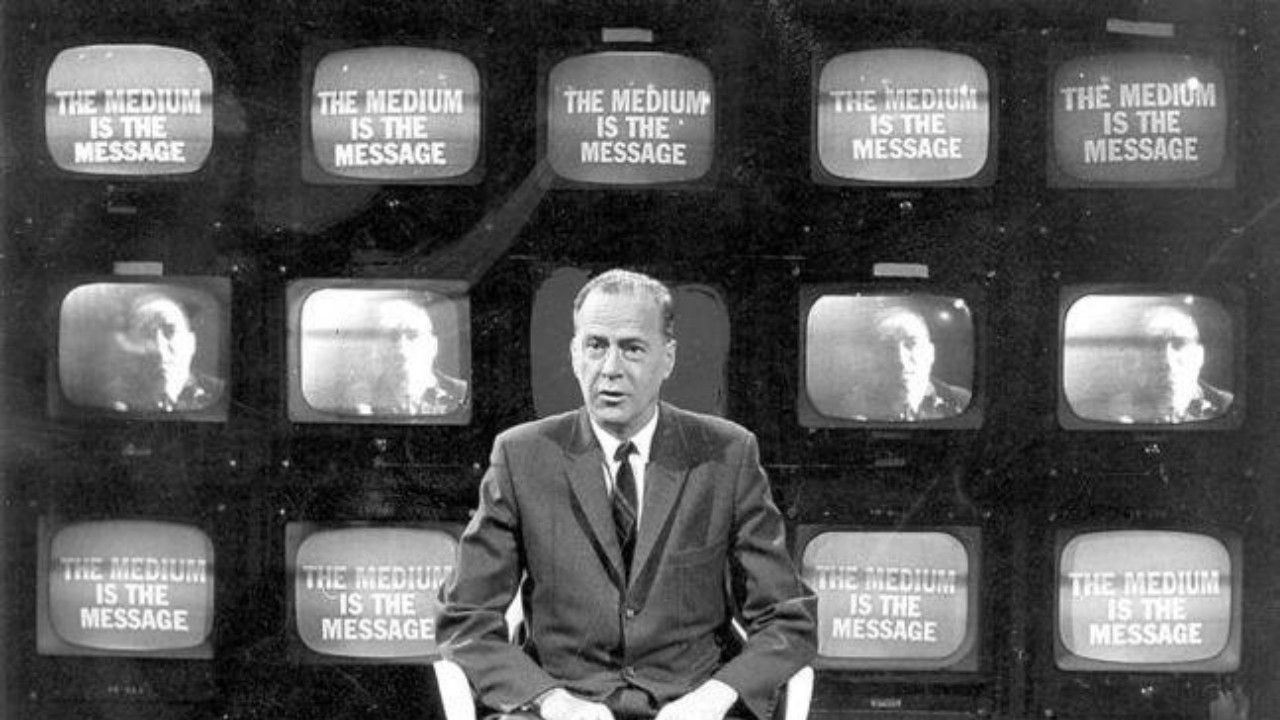
Canadian Philosopher and the father of media studies Marshall McLuhan published a lot of studies before he died in 1980. His work shows signs of predicting the internet decades before it came into existence and changed the world. An excerpt from his work conclusively says —
“…societies have always been shaped more by the nature of the media with which men (people) communicate than by the content of the communication. All technology has the property of the Midas touch; whenever a society develops an extension of itself, all other functions of that society tend to be transmuted to accommodate that new form; once any new technology penetrates a society, it saturates every institution of that society.”
http://www.slangbusters.com
hello@slangbusters.com
903, Signature-1,
S.G.Highway,
Makarba,
Ahmedabad-380051,India.
S.G.Highway,
Makarba,
Ahmedabad-380051,India.
Comments
Post a Comment